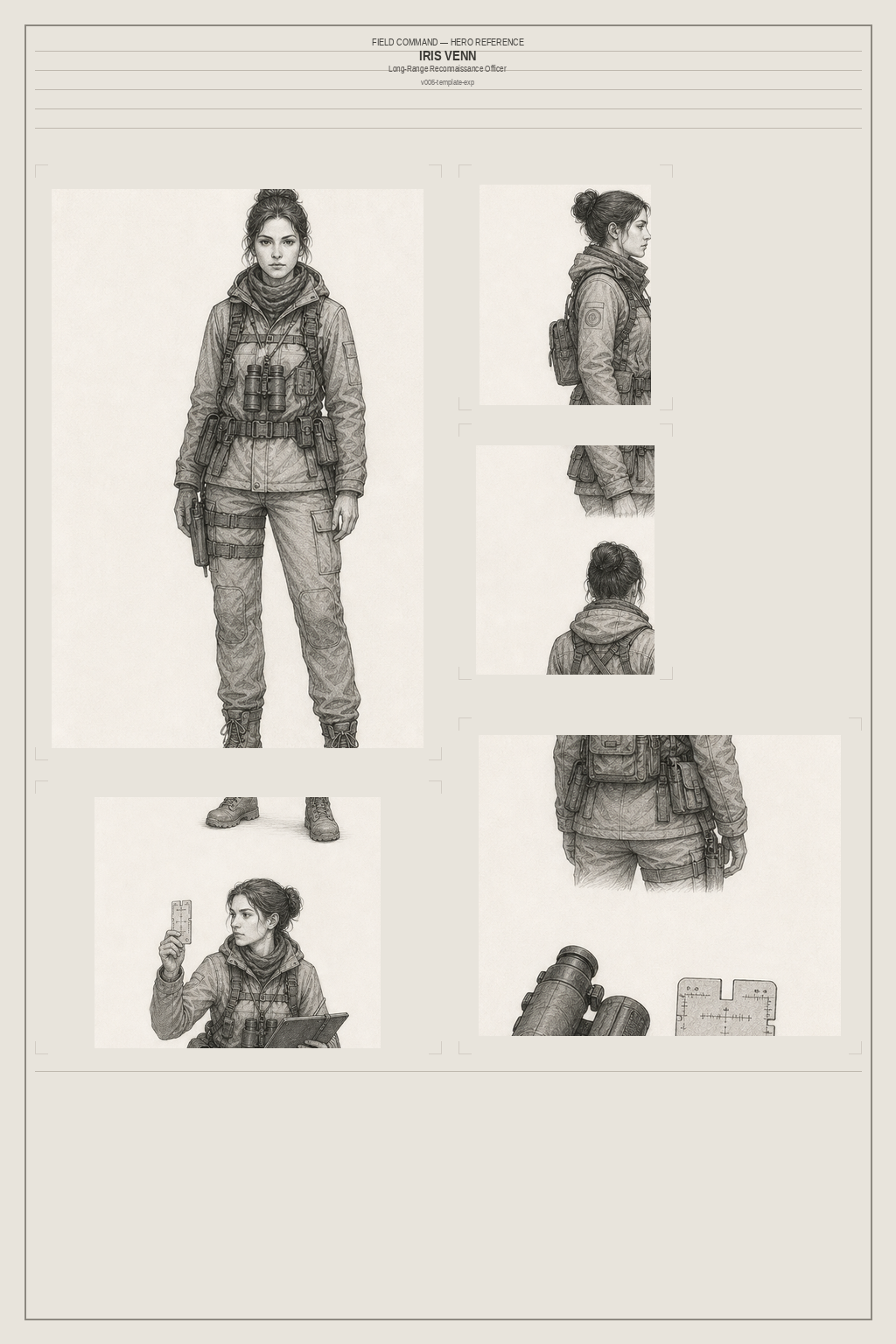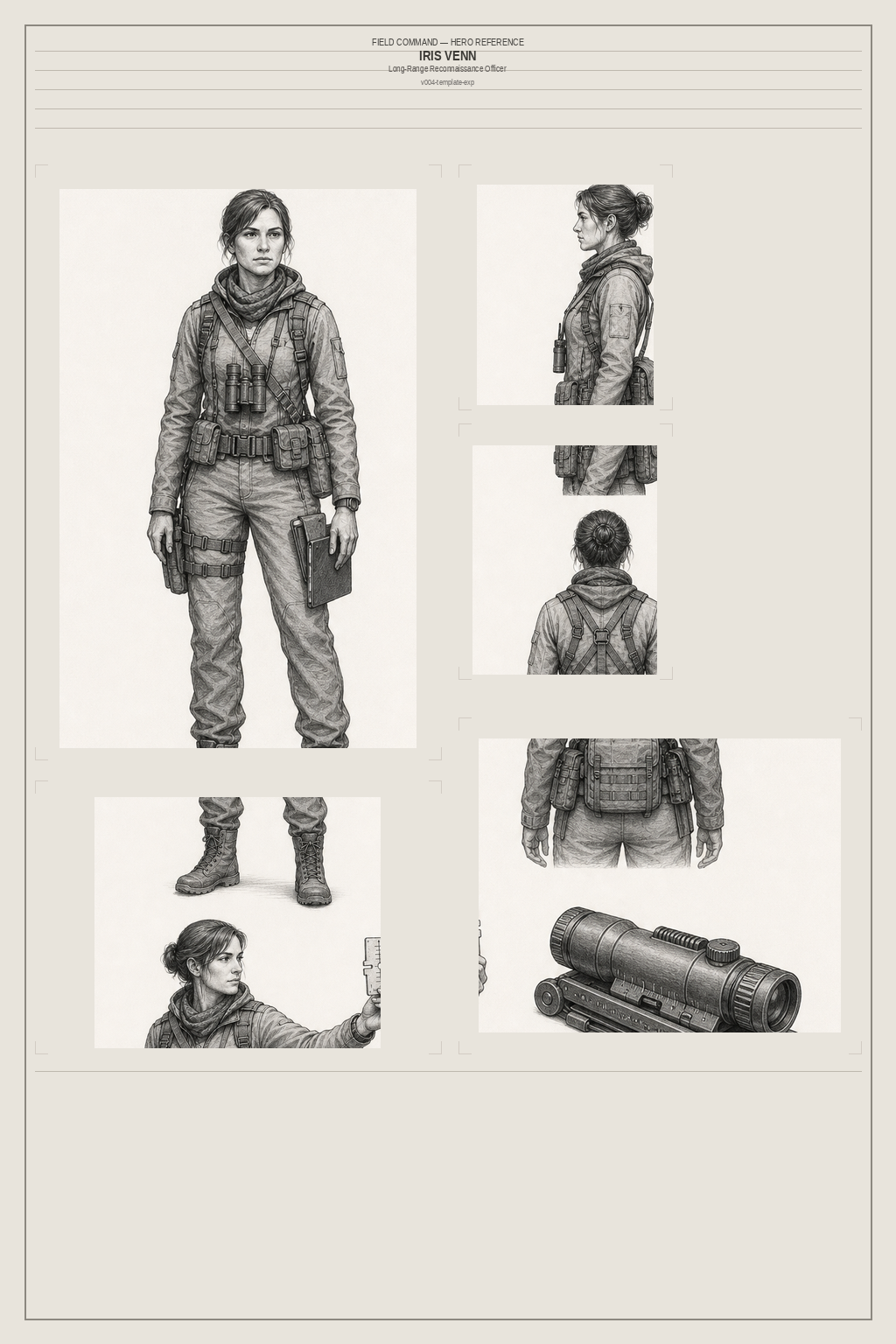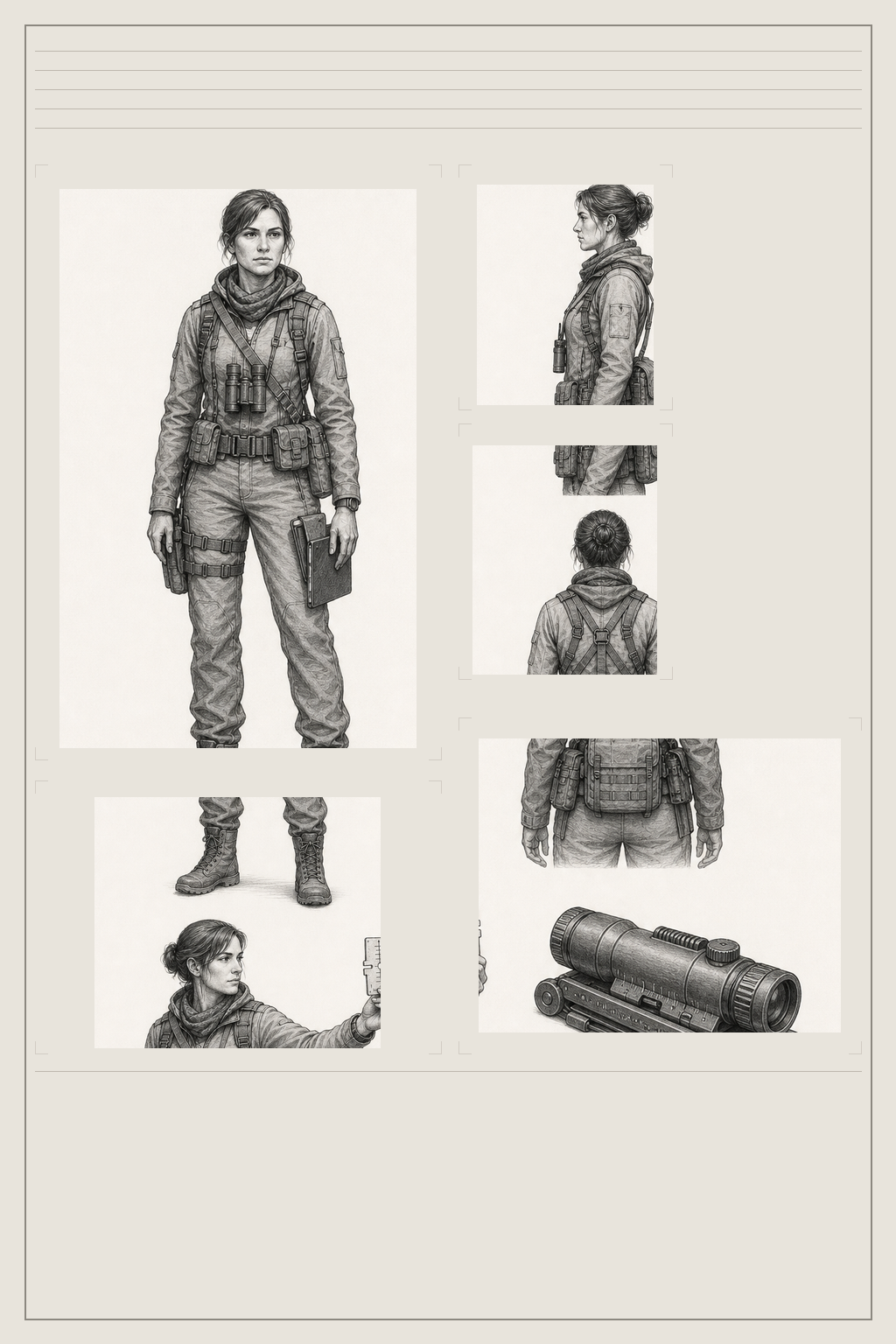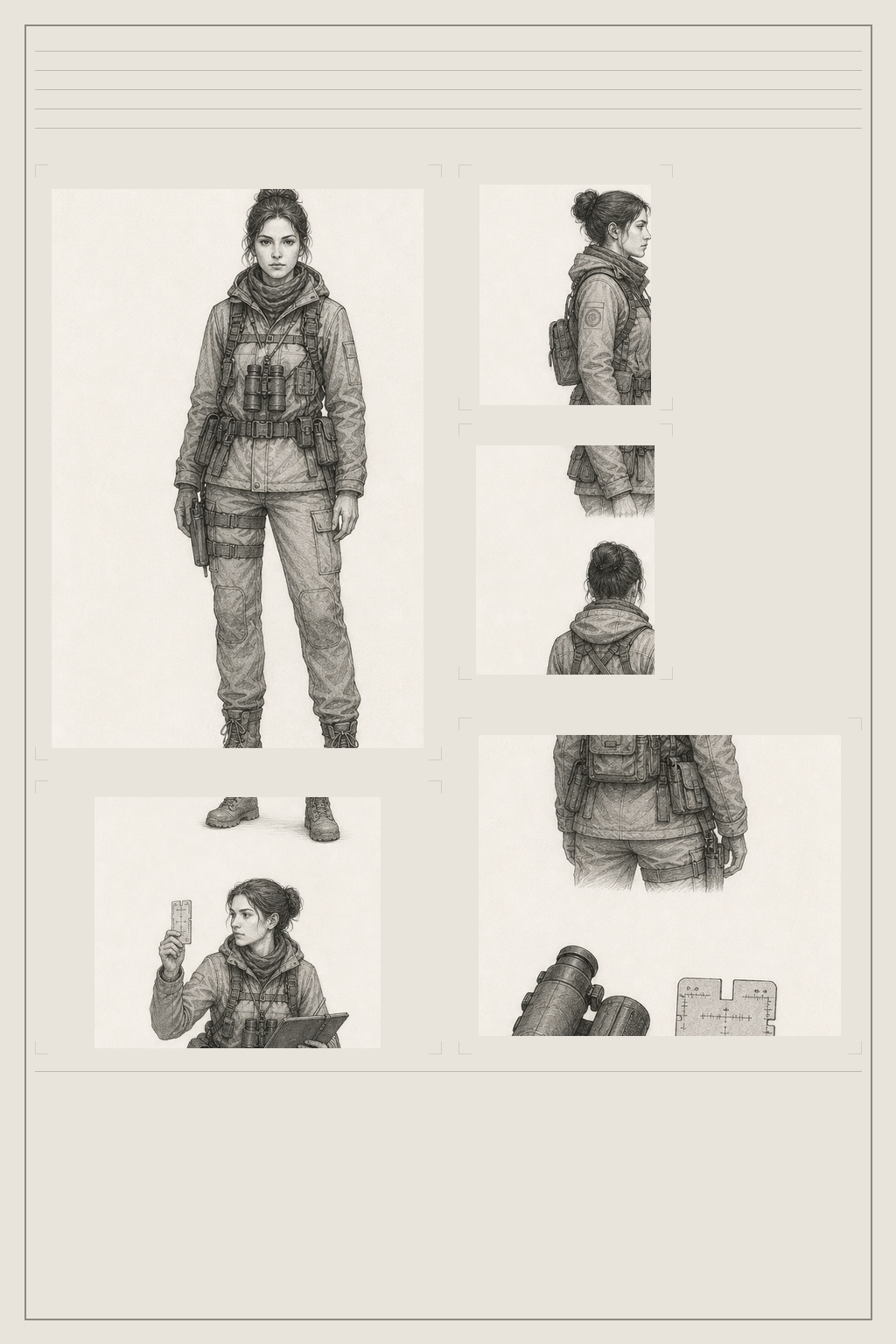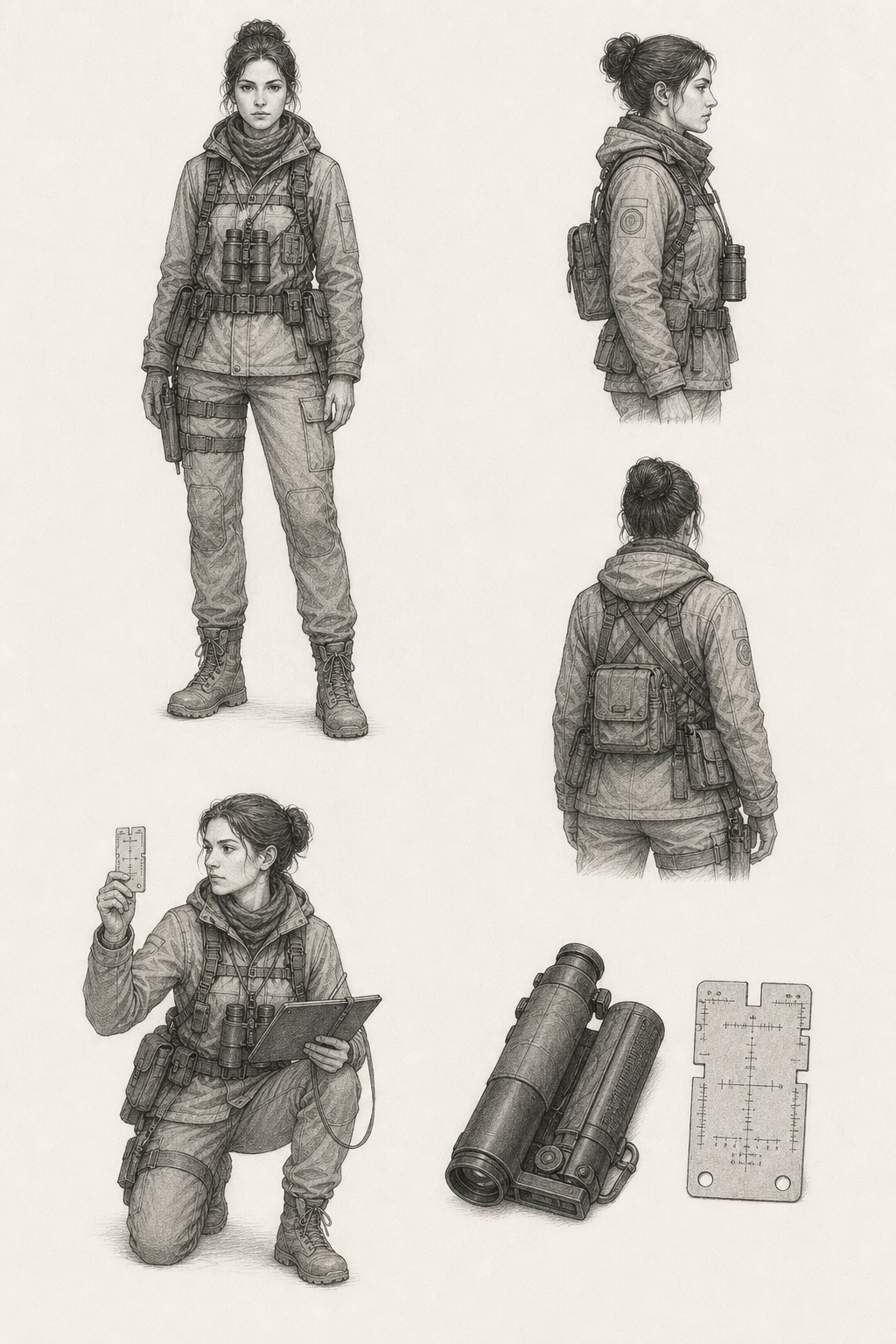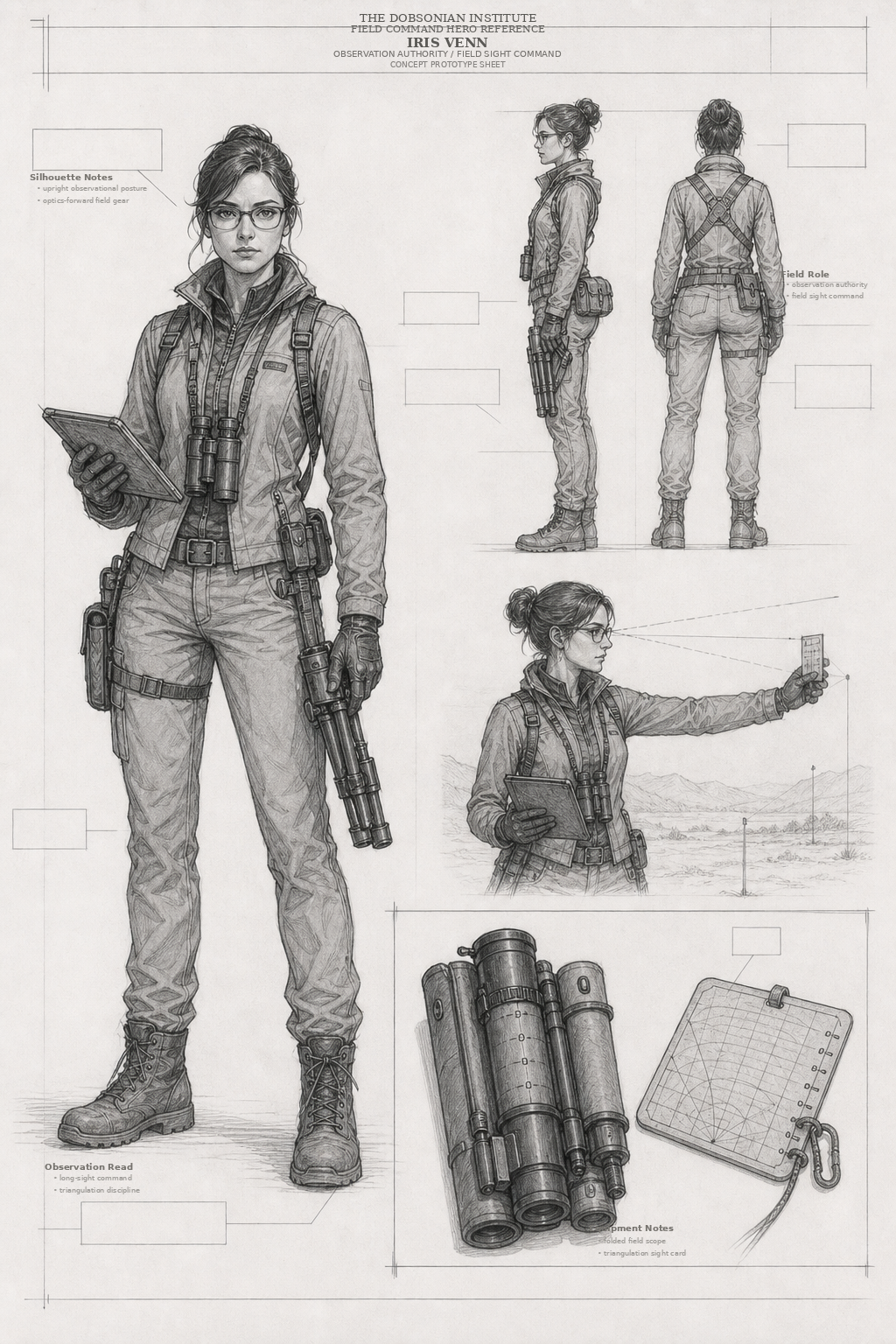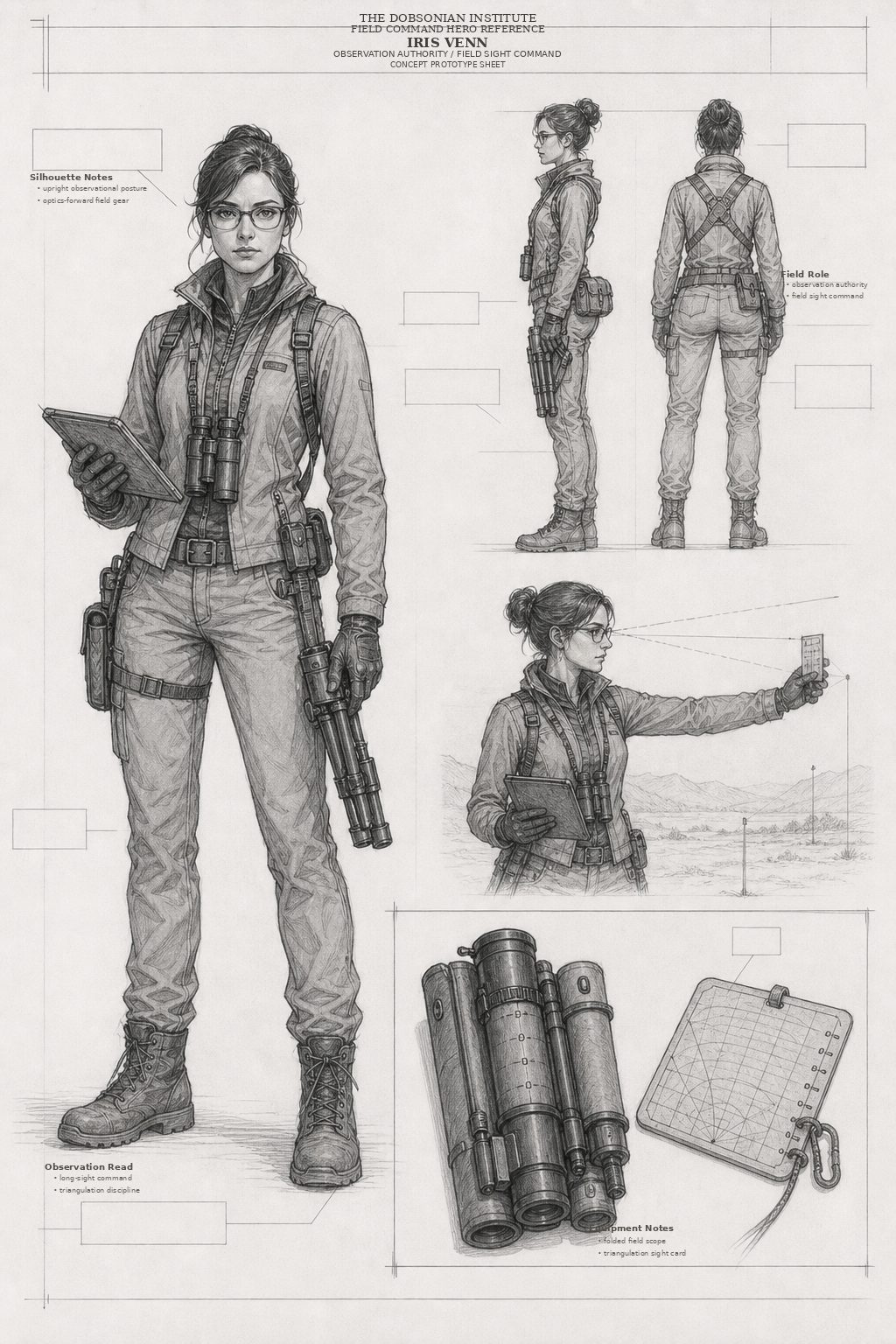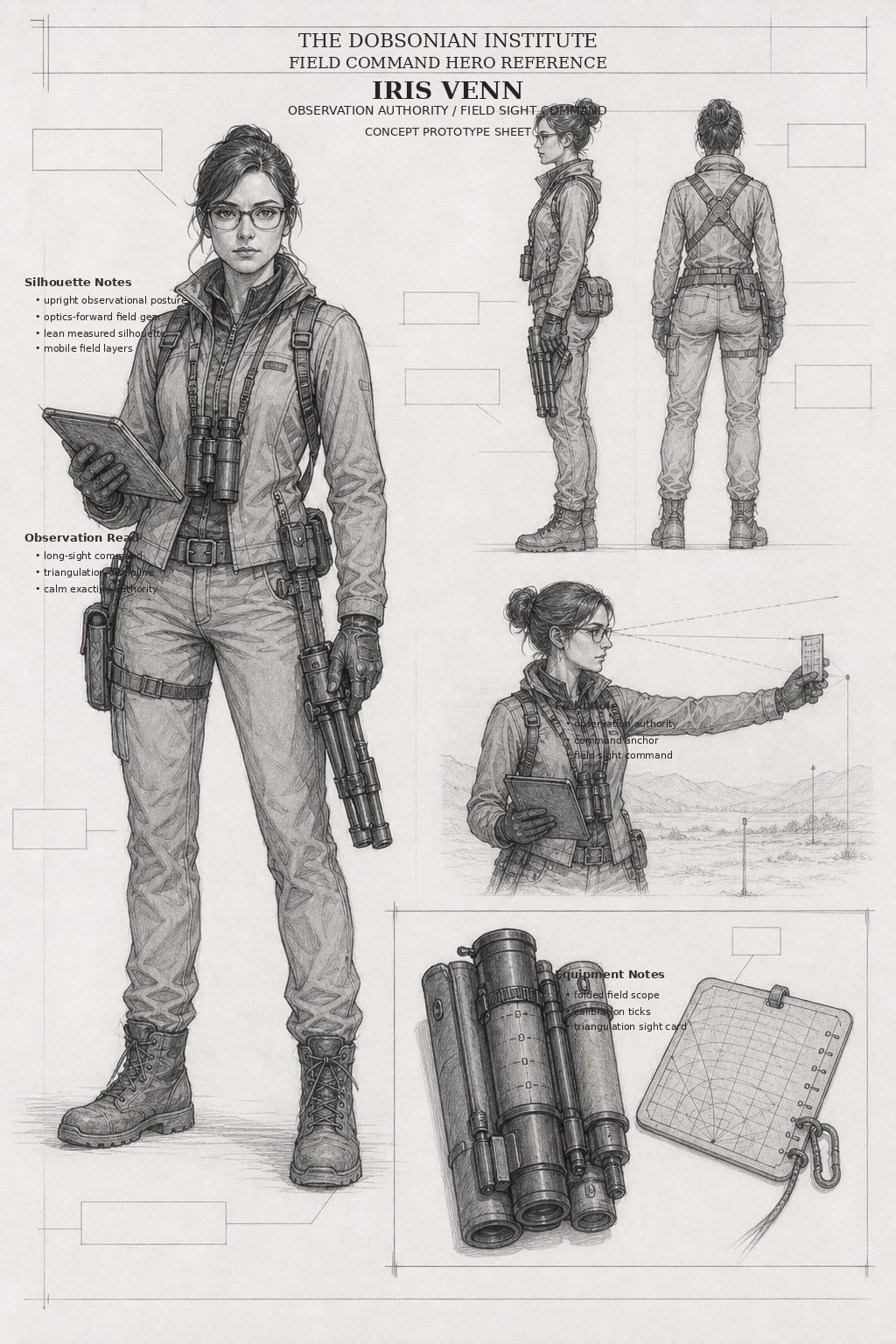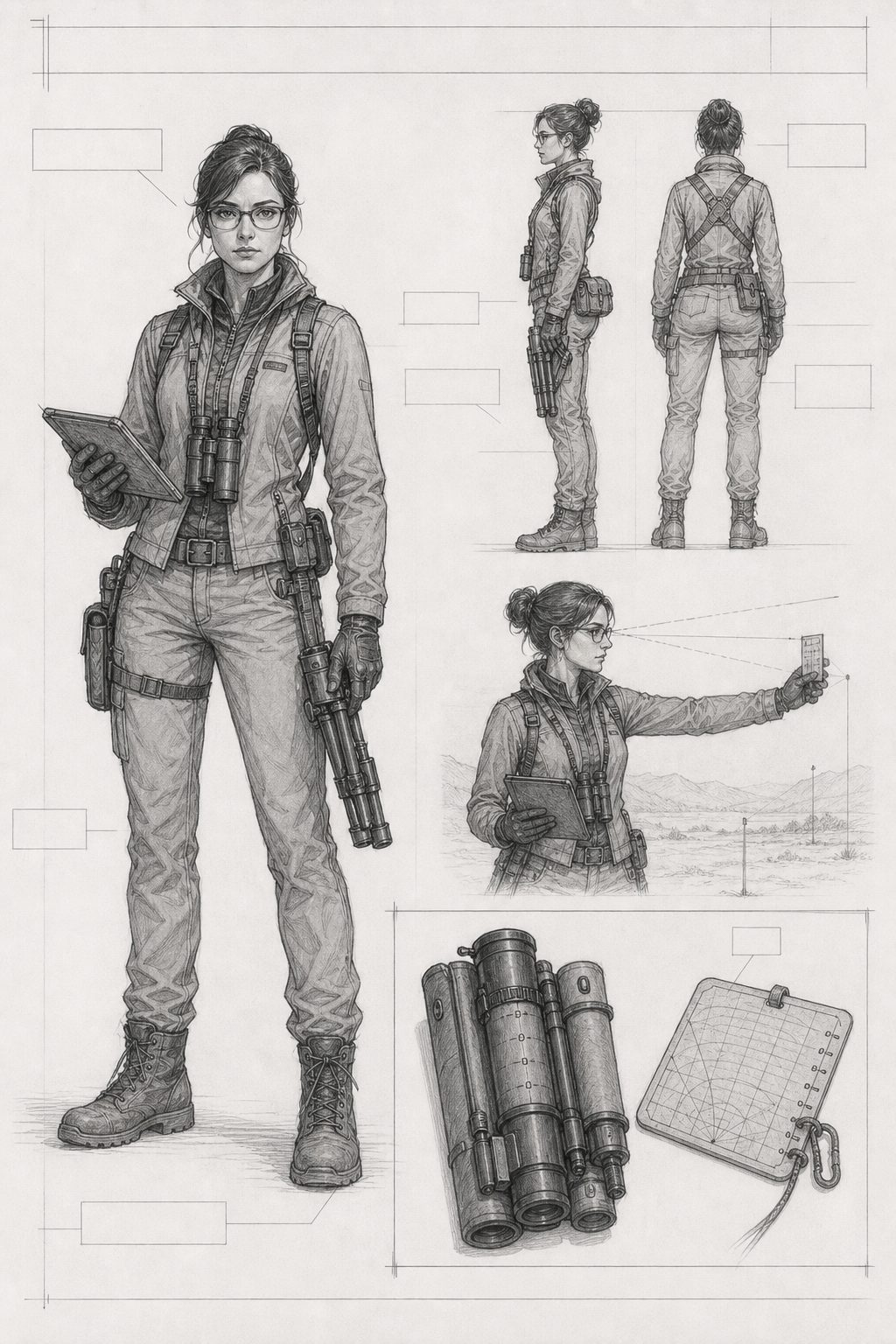
Adjunct
Generated draftadjunct
Sidecars
Notes
---
unit: adjunct
status: draft
mode: Concept Prototype Sheet
version: v002
date: 2026-05-17
image: adjunct_2026-05-17_v002.png
prompt: adjunct_2026-05-17_v002.prompt.md
source_image: /mnt/data/vault/dobsonian-field-command/.fieldvault-state/generated/adjunct_2026-05-17_220057_openai.png
vault_path: /mnt/data/vault/dobsonian-field-command/02-generated/adjunct/
---

## Verdict
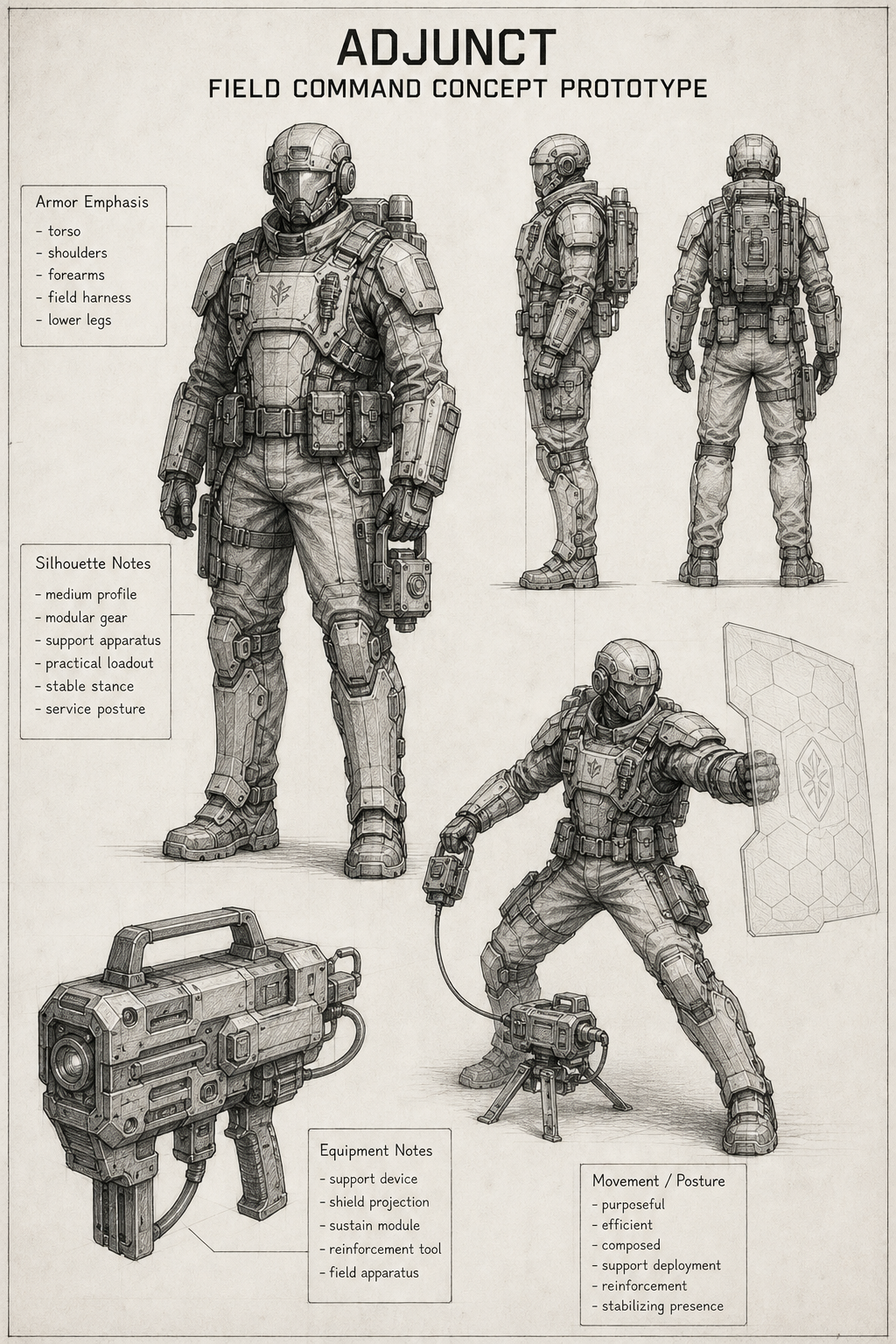
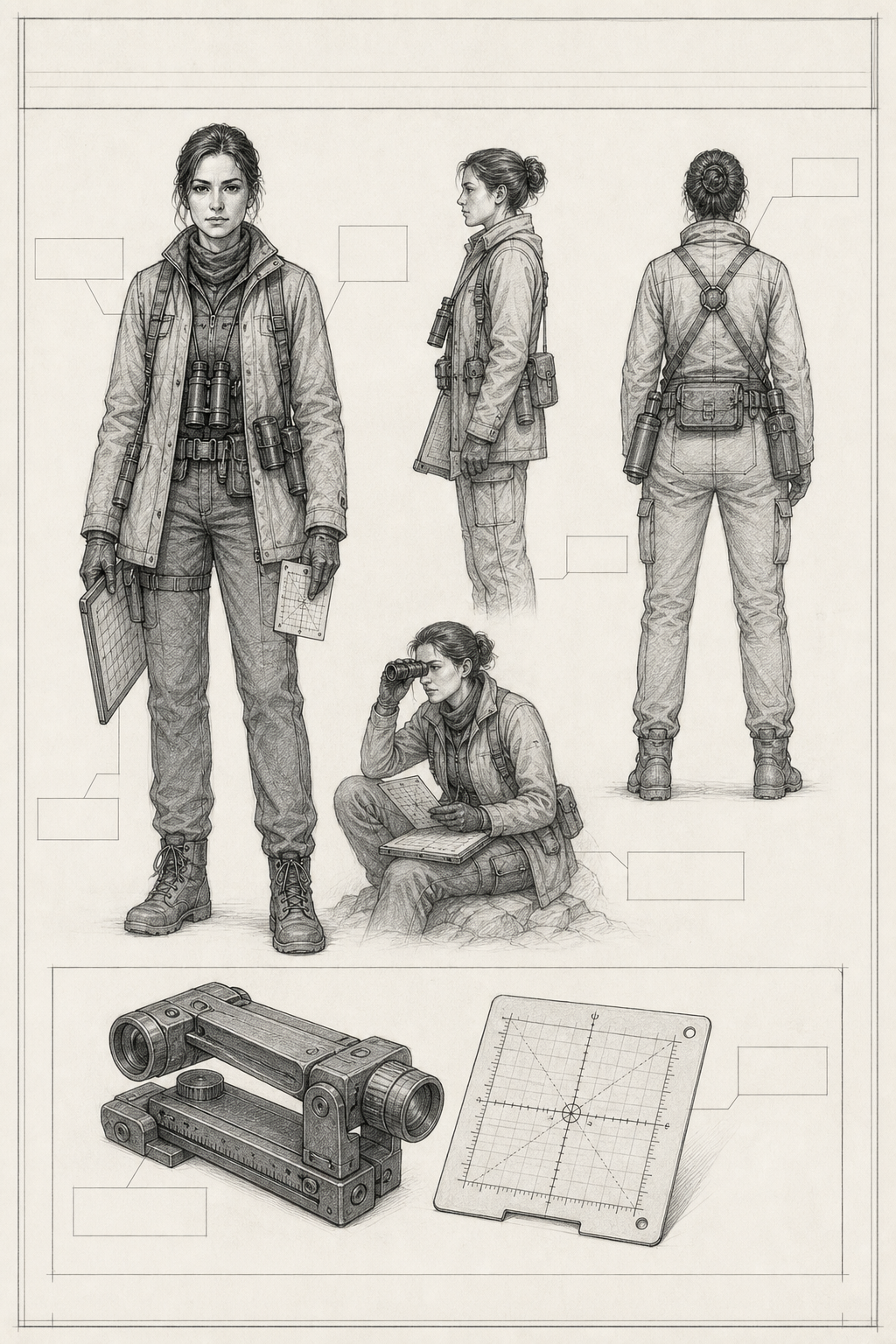
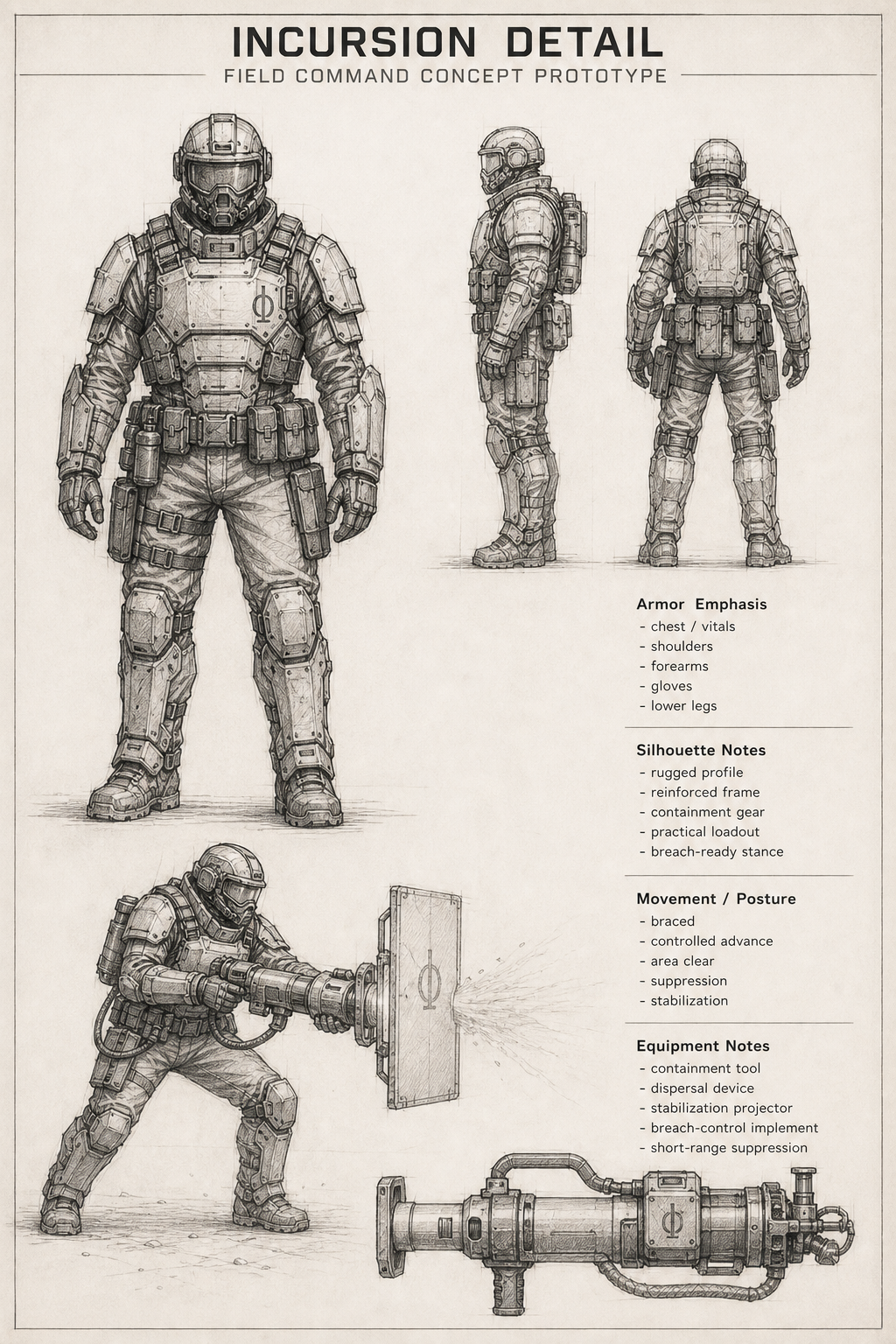
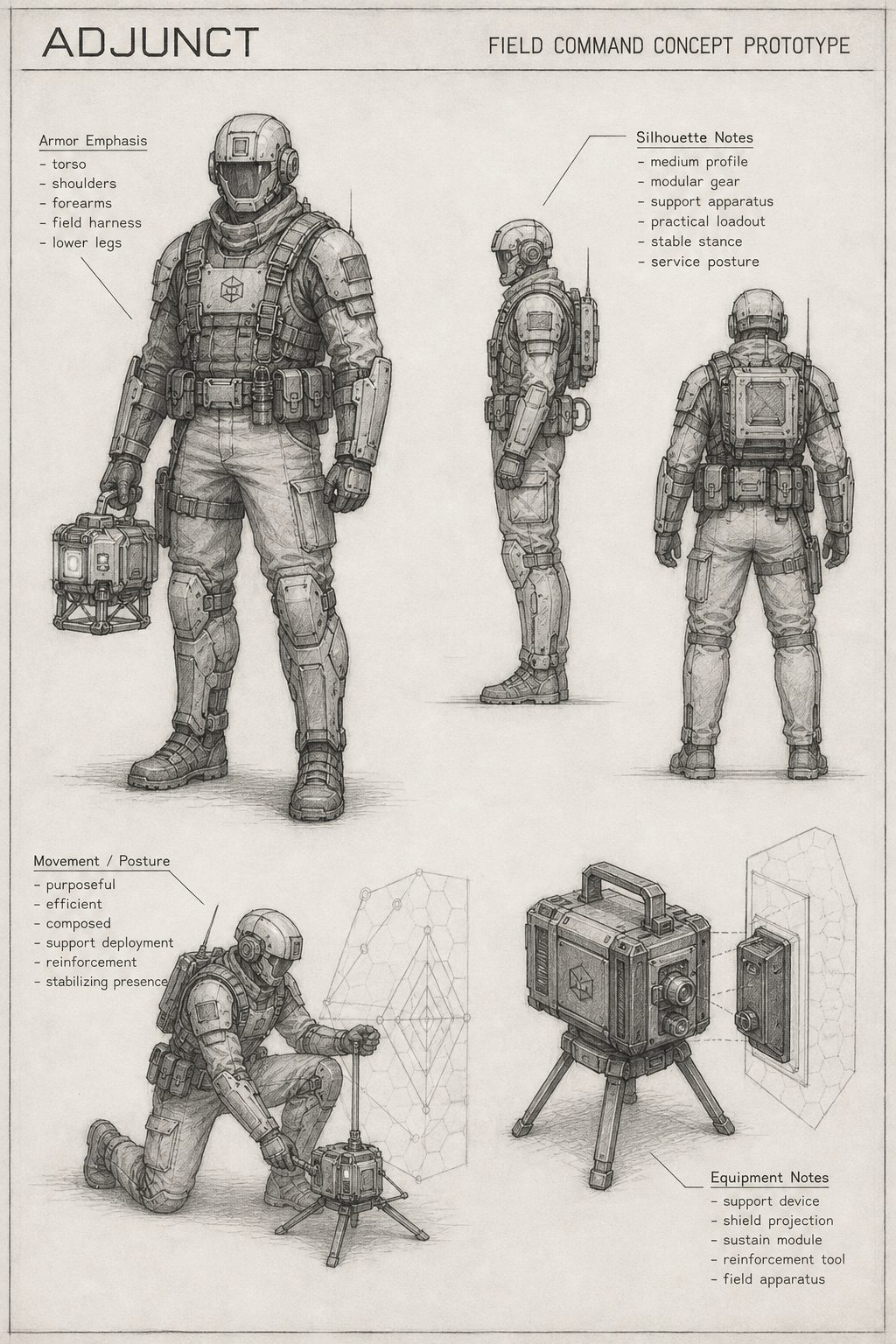
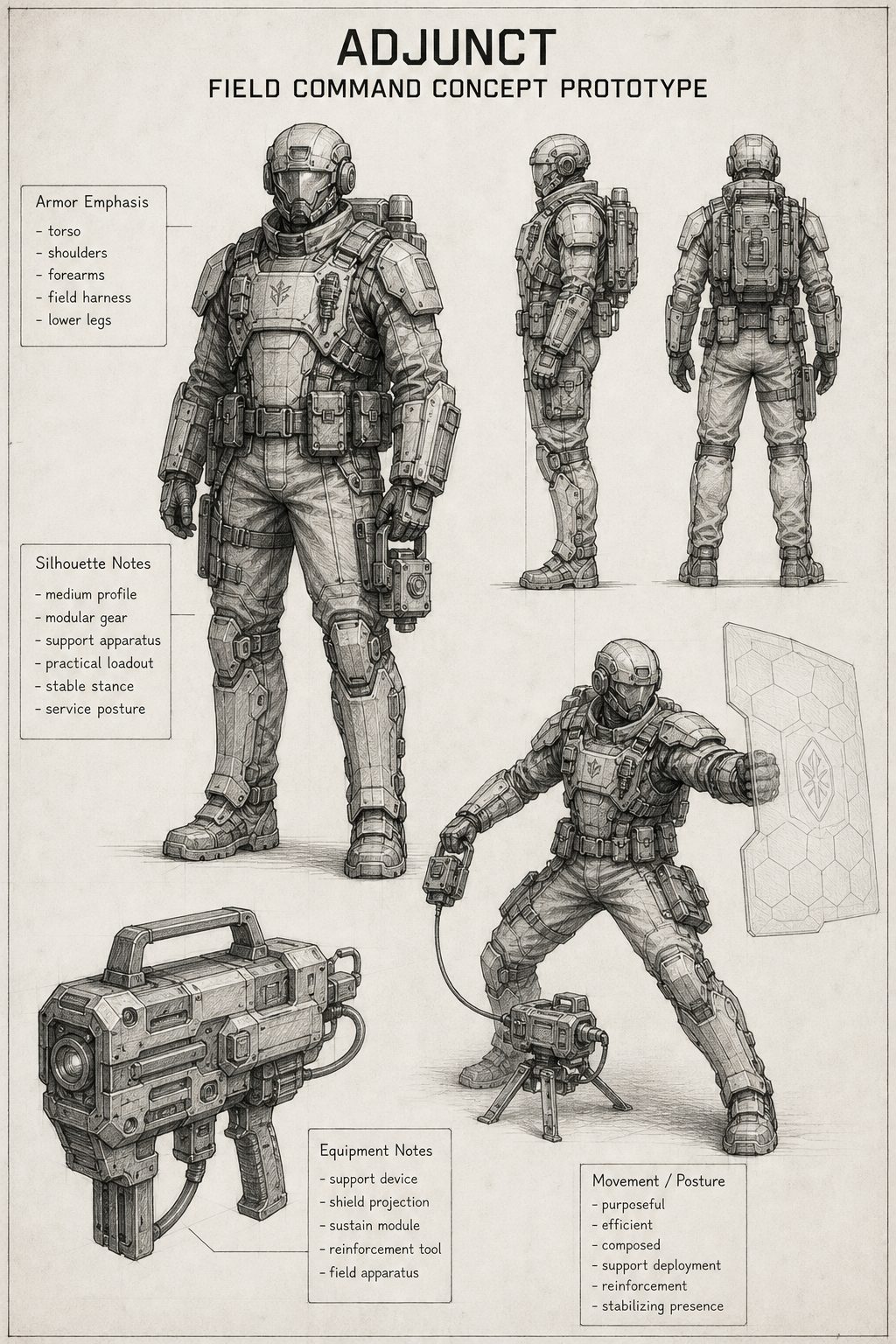
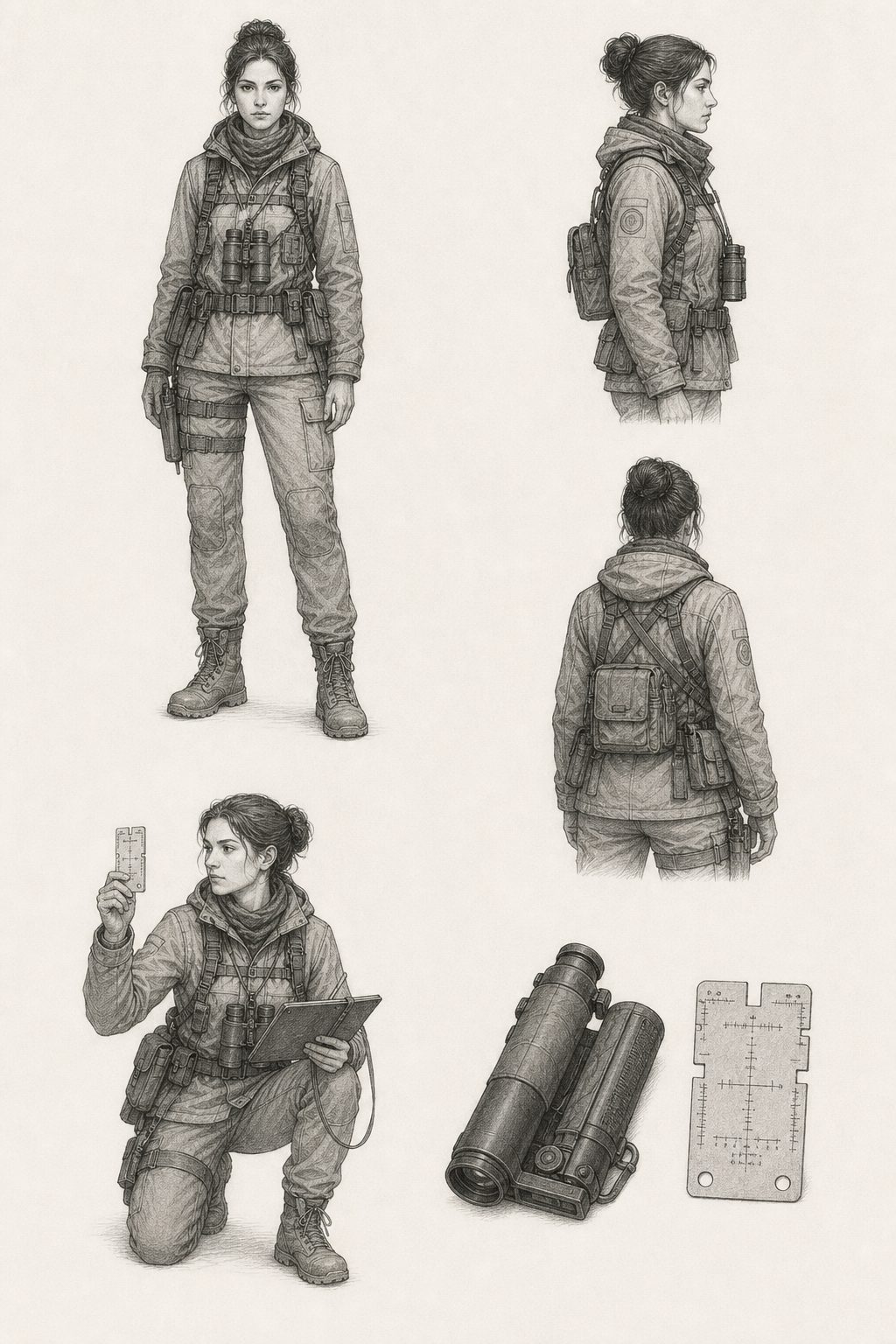
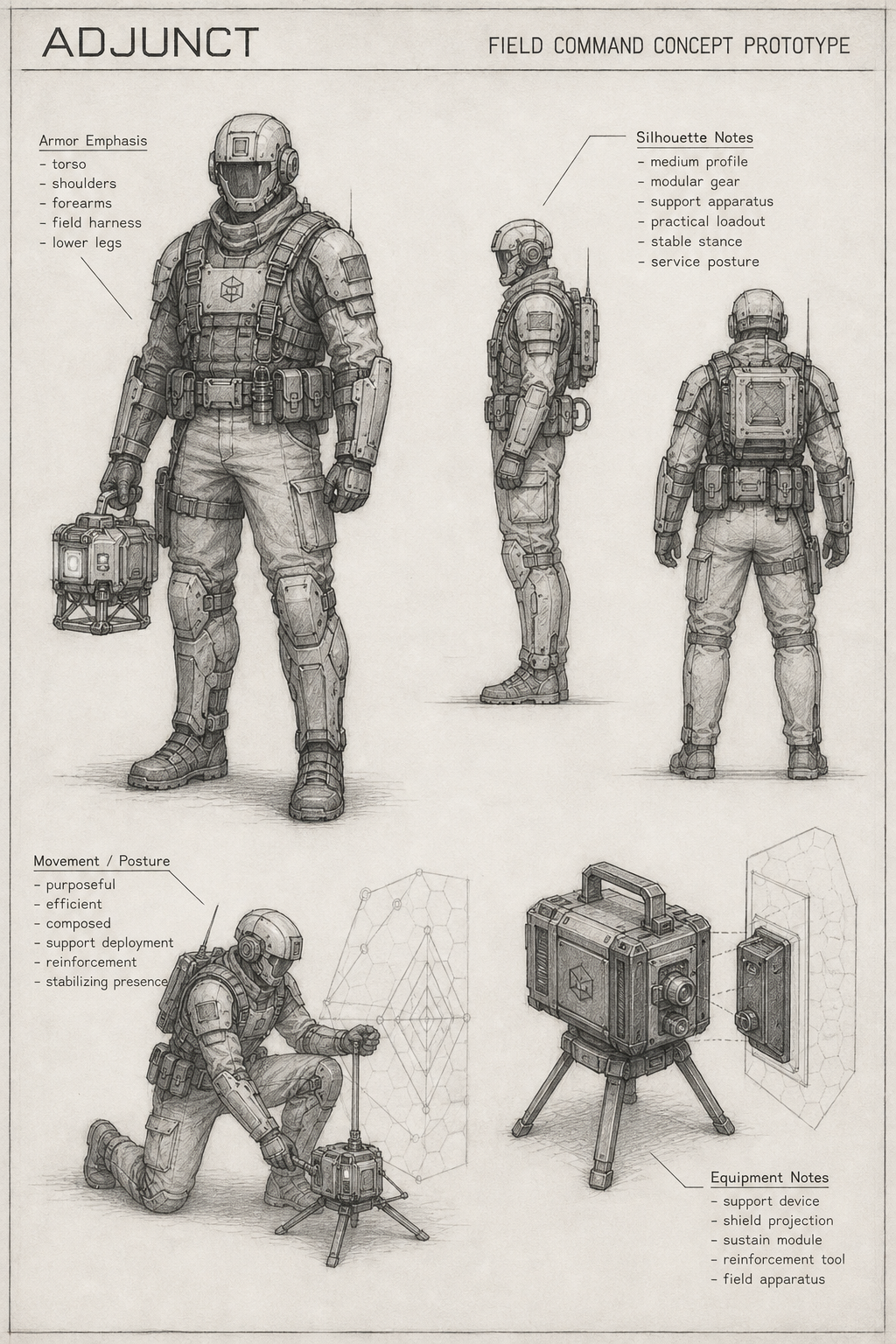
Strong Adjunct v002 improvement. This draft is much closer to the intended Field Command support identity than v001.

The unit now reads as operational continuity support rather than frontline assault personnel. The support case, deployable field apparatus, and shield/field geometry are working well. The danger profile is also correct: capable, durable, and quietly important through utility and stabilizing presence rather than overt aggression.

This should replace v001 as the current Adjunct working visual baseline, but should not be promoted to selected/final yet.

## Keep
- document-family consistency
- archival paper / pencil prototype presentation
- clean Field Command sheet layout
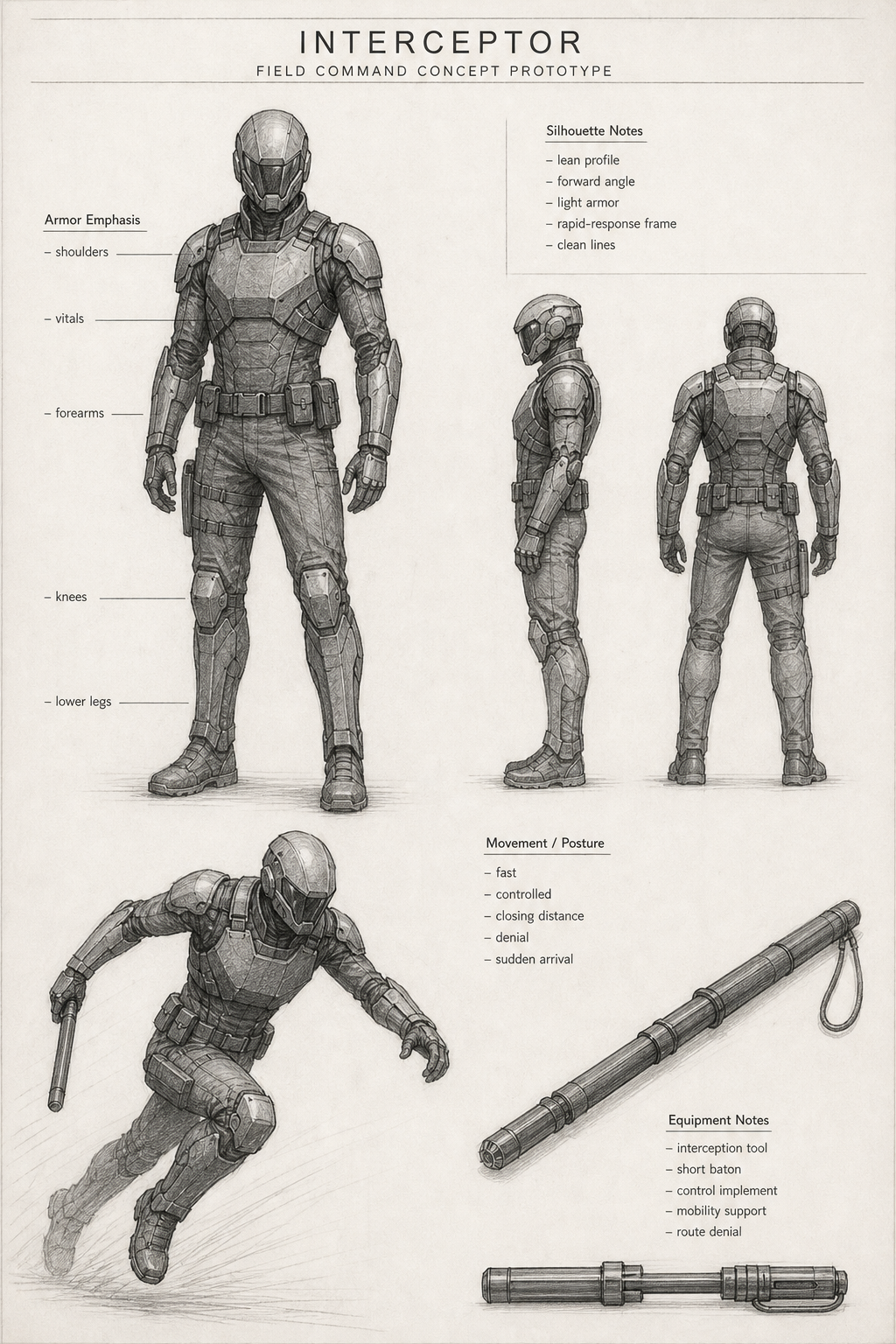
- less assault-trooper-coded silhouette than v001
- support case / portable field apparatus
- deployable support node
- kneeling support-deployment action pose
- shield/field geometry as deployed Field Command support rather than riot shield
- modular support gear and field harness
- calm operational posture
- “the operation continues because this unit is here” read

## Refine
- front-view body can still be slightly less bulky in future variants
- helmet could become a little less generic field-helmet if future passes explore identity
- preserve support apparatus as the primary visual identity
- avoid drifting back toward combat engineer or support gunner language
- keep equipment visibly supportive rather than weapon-like
- preserve practical durability without making the unit heavy infantry

## Notes
This is the second API-generated Adjunct draft and the first Adjunct refinement pass after v001.

Mark as the current Adjunct working visual baseline. Do not promote to selected/final yet. Use v002 as the reference point for future Adjunct refinement passes.
Prompt
# Adjunct

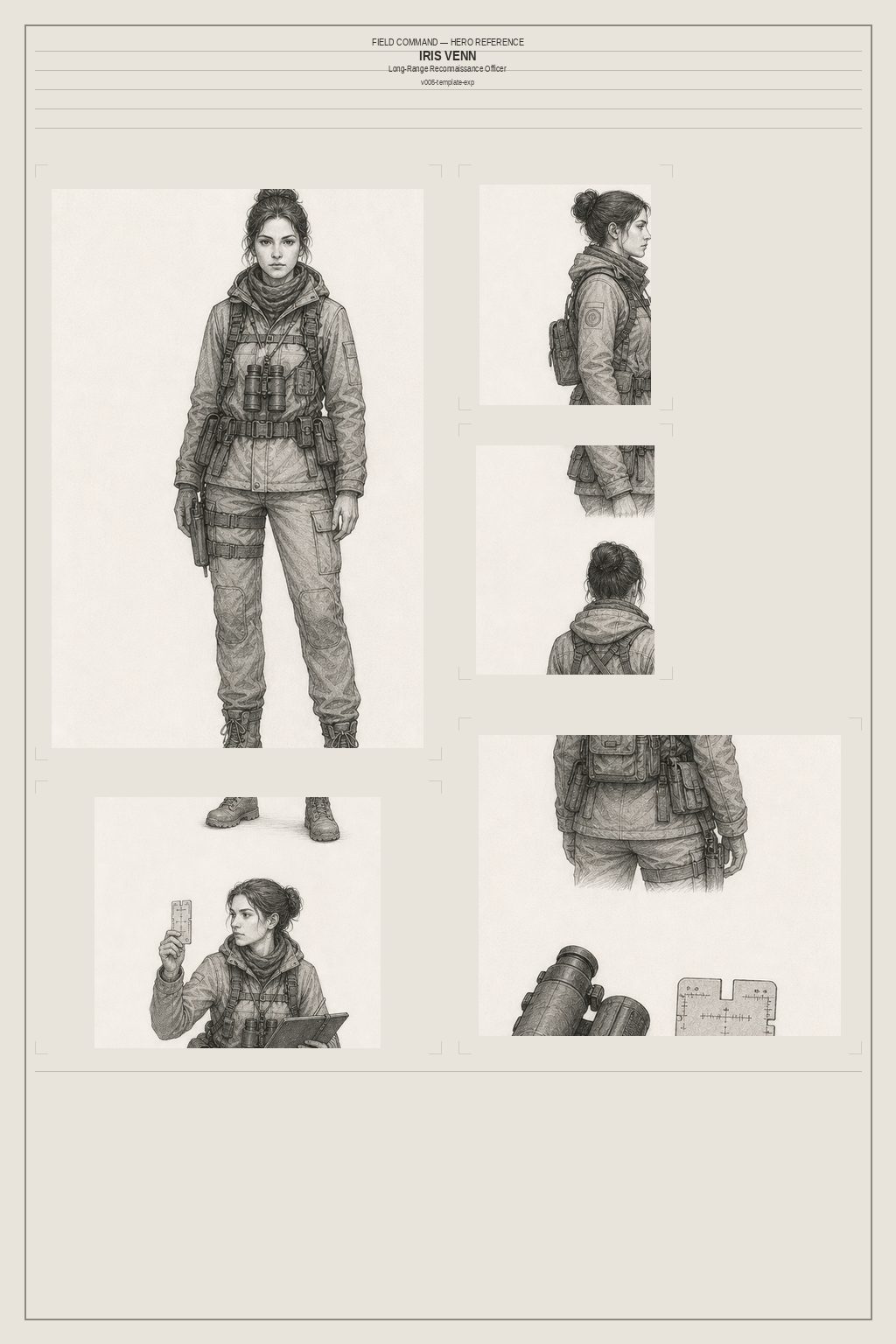
Create a single clean in-universe **Field Command Unit Reference Sheet** for **The Dobsonian Institute**.

Approved presentation mode:
**Concept Prototype Sheet**

Core design intent:
This unit should feel dependable, capable, and quietly dangerous through operational utility, calm competence, sustain capability, and field continuity—not through frontline assault presence. The Adjunct is not a frontline assault unit. It should read as the kind of field asset that keeps Dobsonian operations functioning under pressure: the operation continues because this unit is here. Its authority comes from continuity, reinforcement, practical support apparatus, and stabilizing presence rather than intimidation-by-brute-force or combat-infantry coding.

Global visual style:
Grayscale pencil prototype drawing on archival off-white paper. Clarified hand-drafted technical illustration with clean linework, subtle construction marks, sparse practical annotations, and restrained institutional presentation. Serious, procedural, authoritative, internal-use tone. No flashy effects, no glow, no mystical or cosmic sci-fi styling, no cinematic poster treatment, and no unnecessary background scenery.

Document-family consistency:
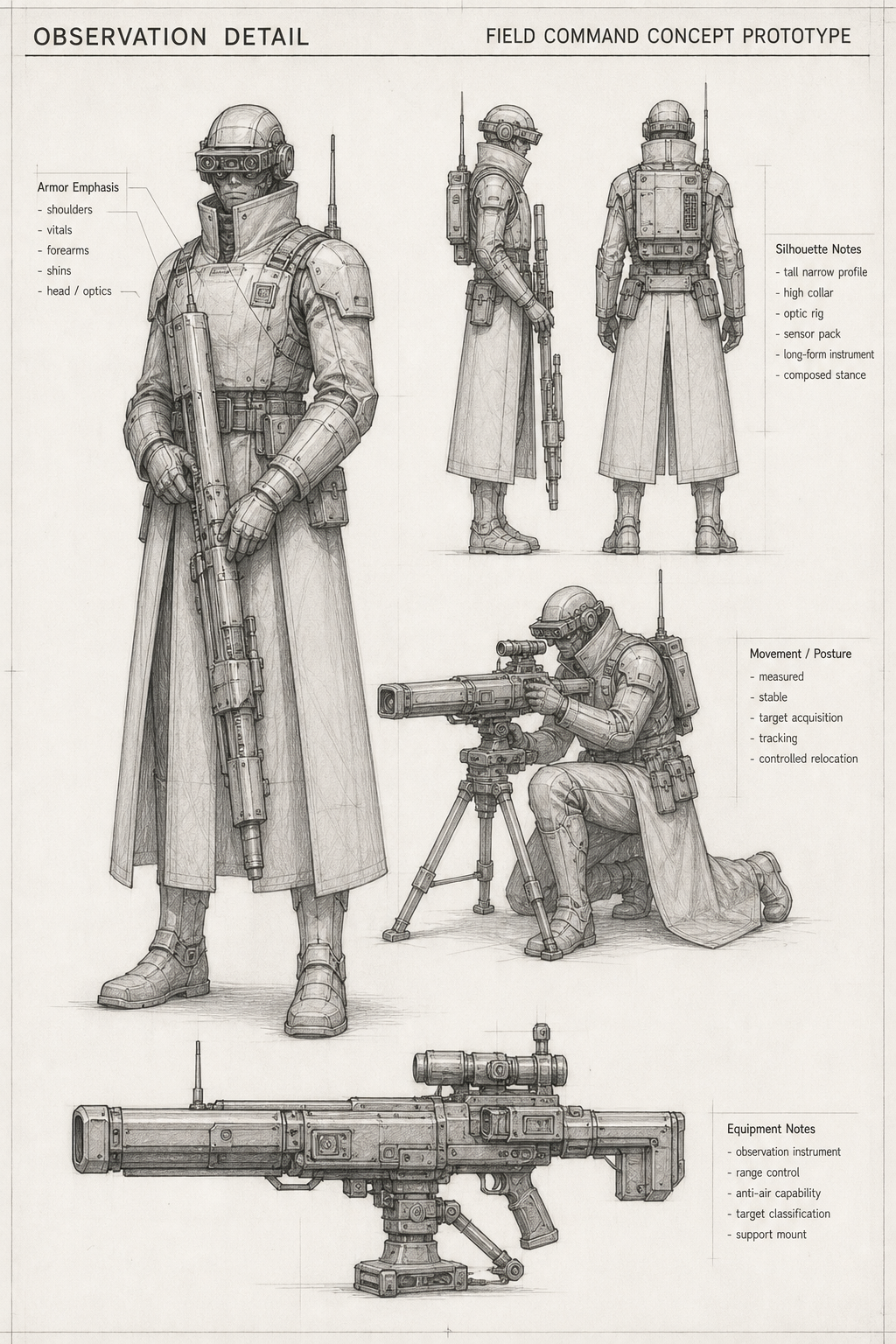
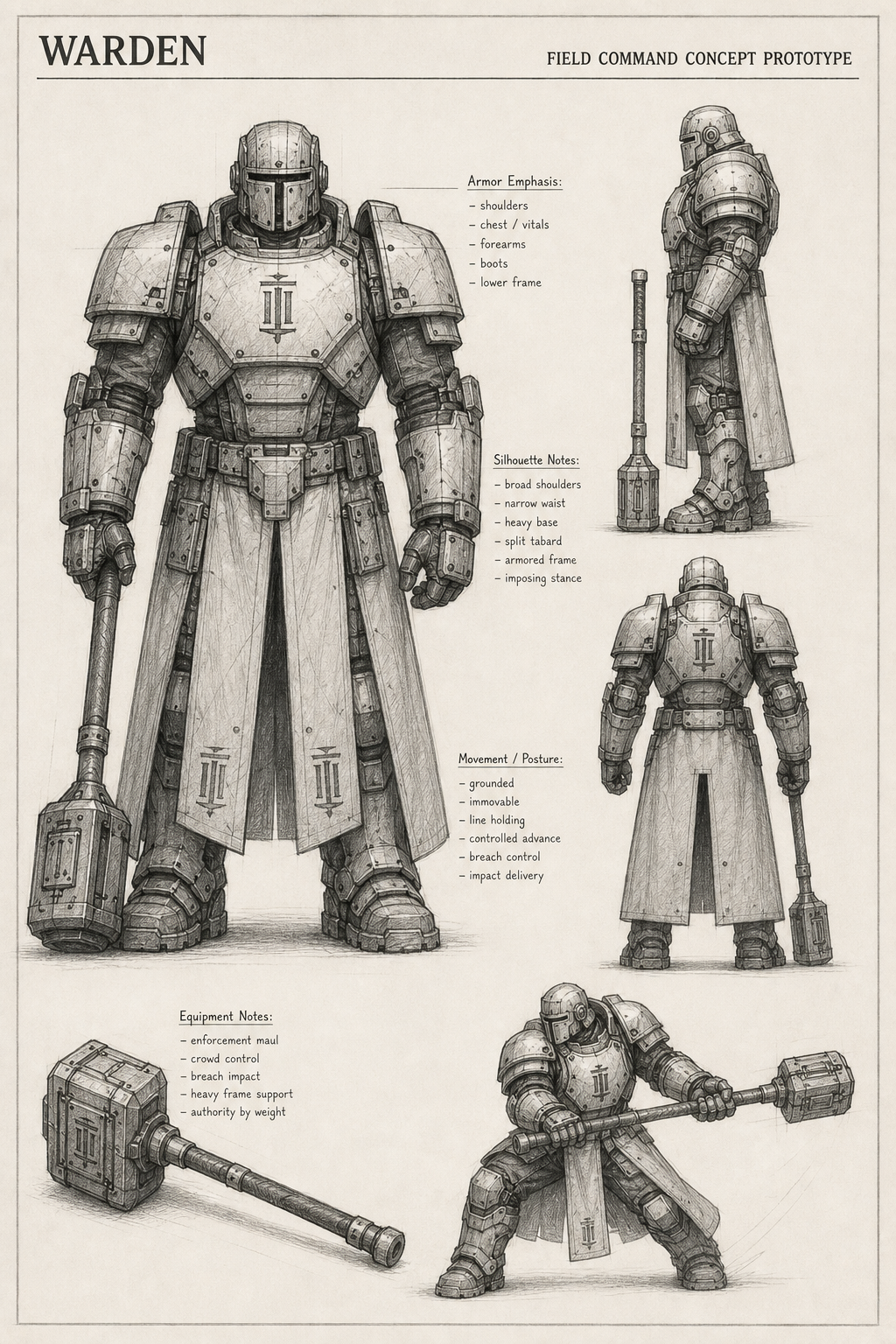
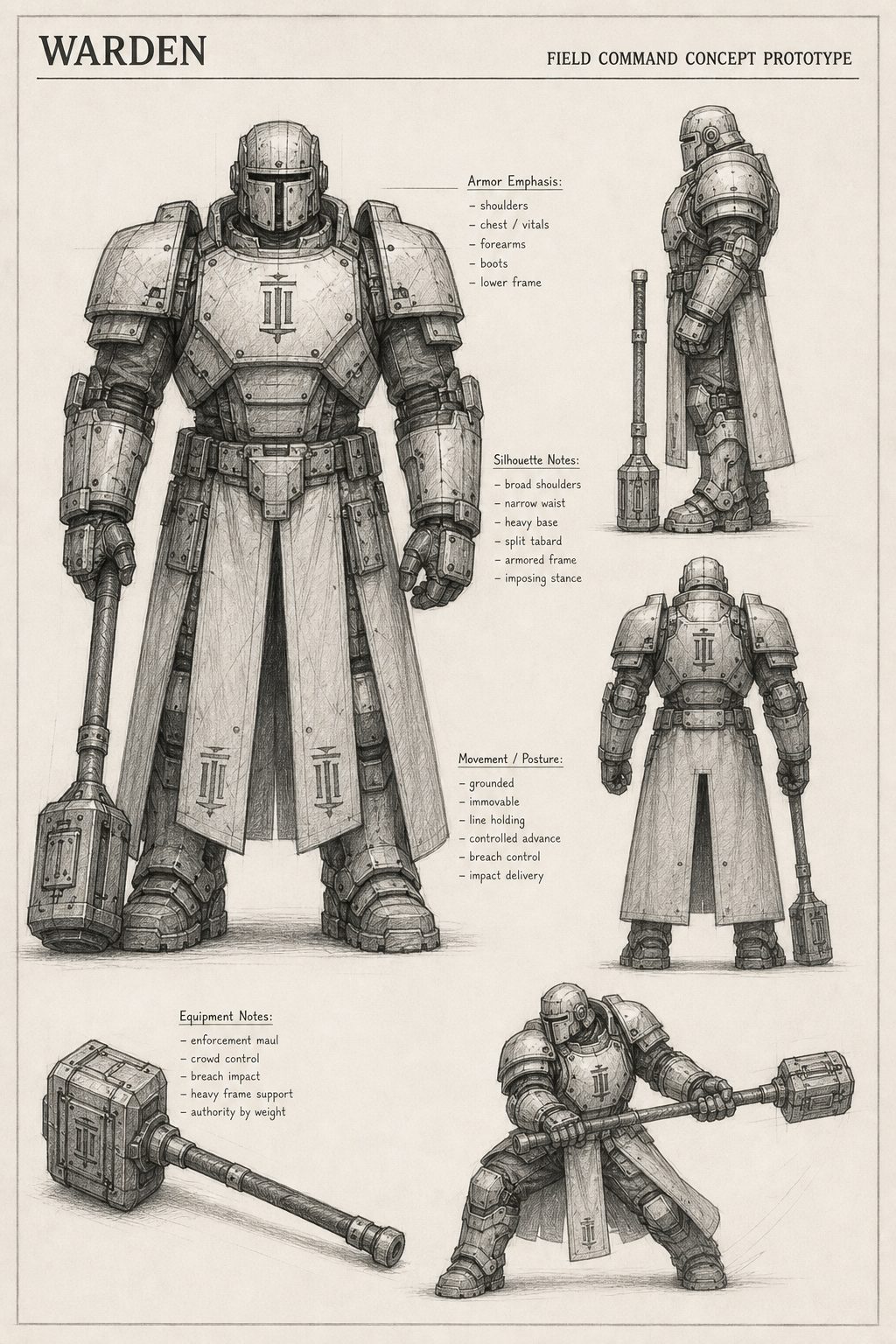
This sheet must match the same document family as the previously established Warden and Interceptor sheets: same page orientation, same header treatment, same margins, same composition logic, same pencil rendering language, same paper texture, and same restrained annotation style. It should look like it belongs in the same Dobsonian Field Command planning archive.

Page/layout requirements:
Render this as a single standardized document page only.

Include:
- one large primary full-body front view
- one smaller side view
- one smaller back view
- one action pose
- one weapon/equipment detail drawing
- brief functional annotation callouts

Header requirements:
At the top of the page, render only these two header texts:
- ADJUNCT
- FIELD COMMAND CONCEPT PROTOTYPE

If exact typography is imperfect, prioritize layout consistency and illustration quality over perfect spelling.

Text rules:
Do not invent lore.
Do not add quotes.
Do not add mottos.
Do not add slogan lines.
Do not add story text.
Do not add fake classifications.
Do not add authorization codes.
Do not add doctrine labels.
Do not add unit IDs.
Do not add bureaucratic metadata.
Do not add footer blocks.
Do not add side labels beyond those explicitly requested.
Do not add any text not explicitly requested here.

Keep rendered text minimal.

Allowed annotation labels only:
- Armor Emphasis
- Silhouette Notes
- Movement / Posture
- Equipment Notes

Allowed annotation text only:

Armor Emphasis:
- torso
- shoulders
- forearms
- field harness
- lower legs

Silhouette Notes:
- medium profile
- modular gear
- support apparatus
- practical loadout
- stable stance
- service posture

Movement / Posture:
- purposeful
- efficient
- composed
- support deployment
- reinforcement
- stabilizing presence

Equipment Notes:
- support device
- shield projection
- sustain module
- reinforcement tool
- field apparatus

Unit-specific content:

Unit name:
Adjunct

Unit role:
Support, sustain, shielding, reinforcement, field logistics, and operational continuity.

Silhouette direction:
Medium profile, but less bulky than a typical armored infantry read. The silhouette should communicate a practical support operator rather than armored infantry: visible modular support gear, field harness, and compact apparatus integrated into the loadout. Reduce chest and shoulder mass compared to assault-oriented designs. Favor service posture and calm readiness—capable and durable, but not heavy, thick, or aggressive. Less massive than a Warden and less fast-response oriented than an Interceptor. The unit should look prepared, useful, and professionally equipped for operational continuity rather than overtly combative.

Armor emphasis:
Practical protection only where needed: torso, forearms, shoulders, and lower legs protected but not heavily plated. Armor should be integrated with support harness and tools rather than reading as assault plating, heavy tactical armor, or generic sci-fi infantry bulk. Visible field harnesses, support mounts, and modular gear integration are encouraged. Avoid oversized chest plates, stacked shoulder mass, or tank-like silhouette weight.

Movement / posture:
Support deployment, bracing a field device, reinforcing a position, or stabilizing nearby units or field conditions. Calm under pressure: purposeful, efficient, and composed. The action pose should suggest operating support apparatus—not charging, dueling, weapon-forward combat, or aggressive forward assault. The unit should project calm operational confidence and field continuity.

Weapon / equipment:
The primary equipment must read as support apparatus, not a weapon. Use a shield projector, sustain module, reinforcement emitter, field stabilizer, portable continuity device, deployable support node, or compact field apparatus. The device may be handheld, backpack-linked, or tripod/deployable. Shield projection should feel like deployed Field Command geometry or an active support field, not a handheld riot shield. A small defensive sidearm or implement is acceptable only as secondary equipment and must be visually understated. Avoid large gun-like equipment, rifle-shaped support tools, or anything that dominates the silhouette as firearm-first.

Special visual constraints:
Do not make this unit look like a fantasy healer, cleric, generic combat medic, combat engineer, assault trooper, space marine, riot-shield soldier, heavy infantry, or generic sci-fi support gunner.
Do not make the support device look like a large firearm or primary gun.
Do not overbulk the torso, shoulders, or backpack.
Do not use obvious medical symbolism, soft mystical support vibes, or overblown gadget clutter.
Shield projection should feel like deployed Field Command geometry or support field, not a handheld riot-shield trope.
Do not make the unit overly passive or overly fragile in appearance.
The unit should read as professional operational support: practical, capable, quietly essential, and dangerous through competence and utility rather than overt aggression.
Iterations & Artifacts (2)